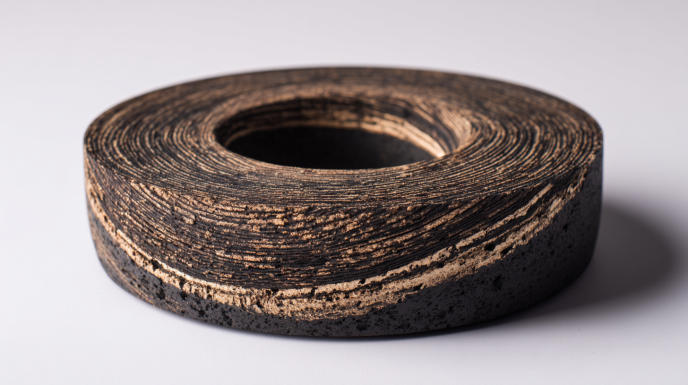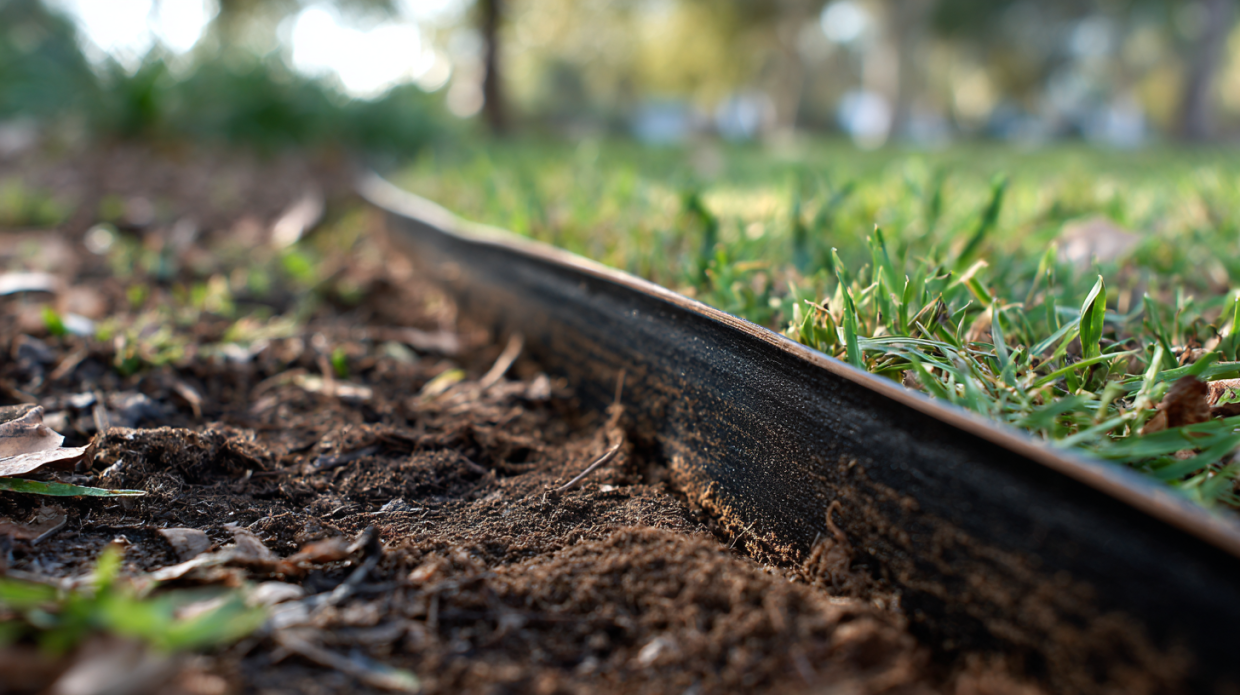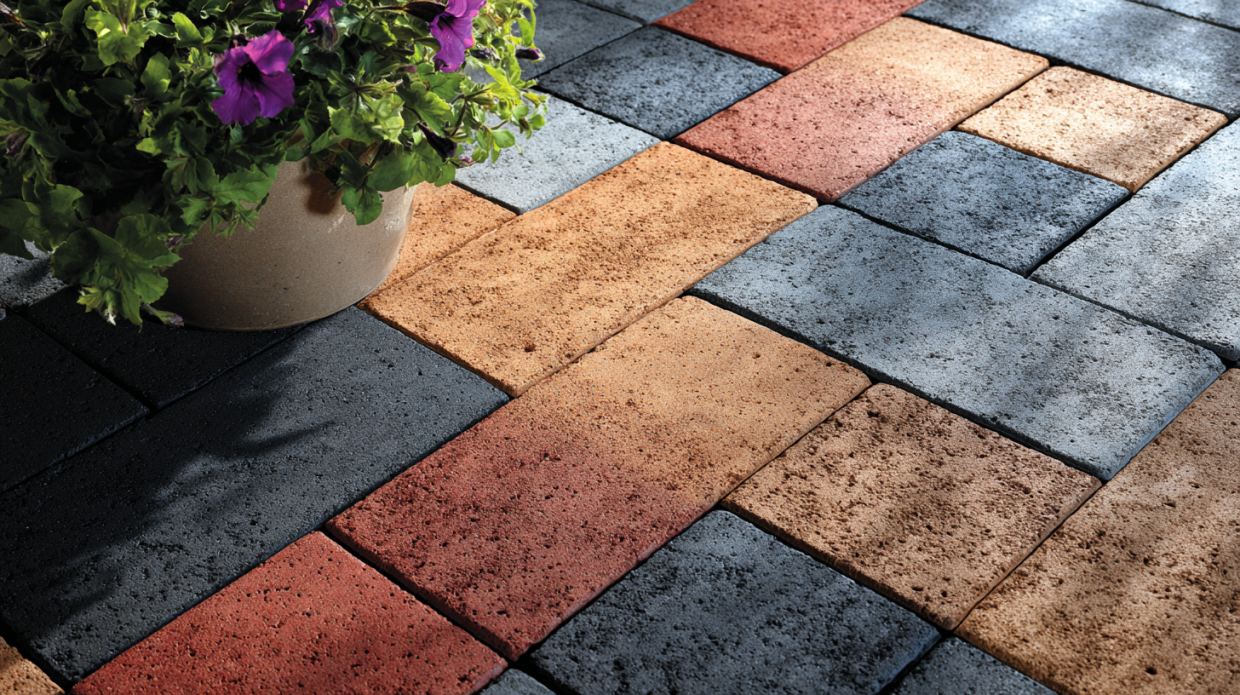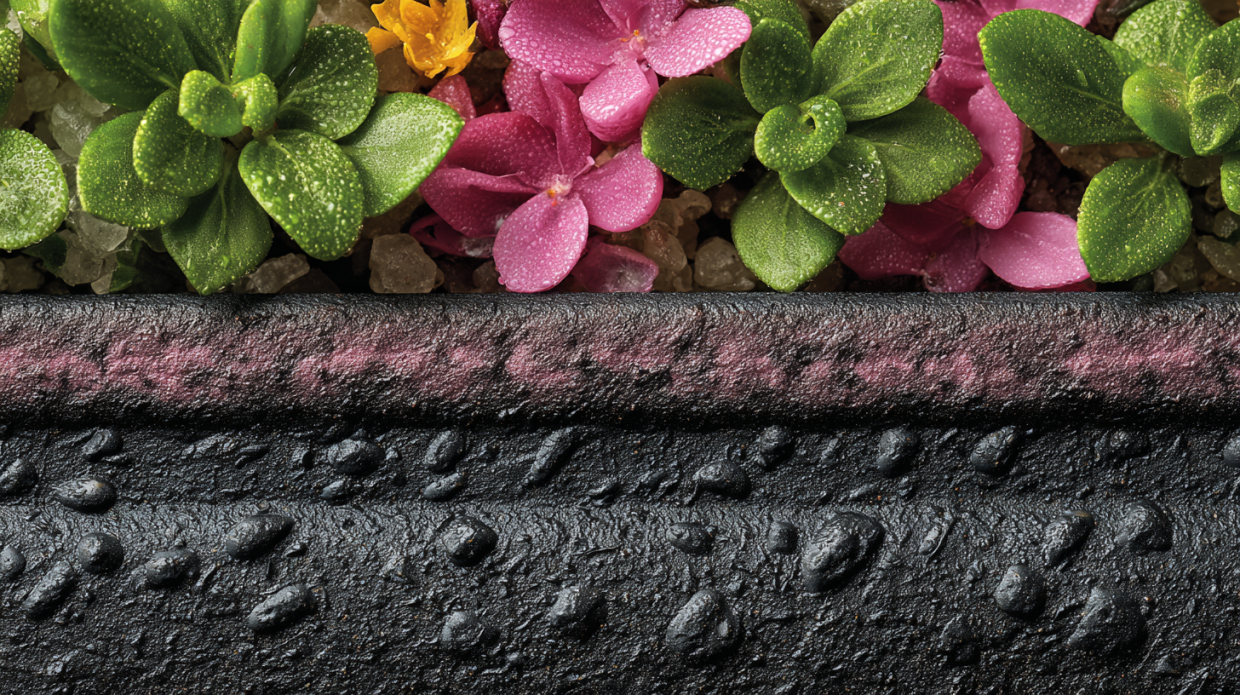
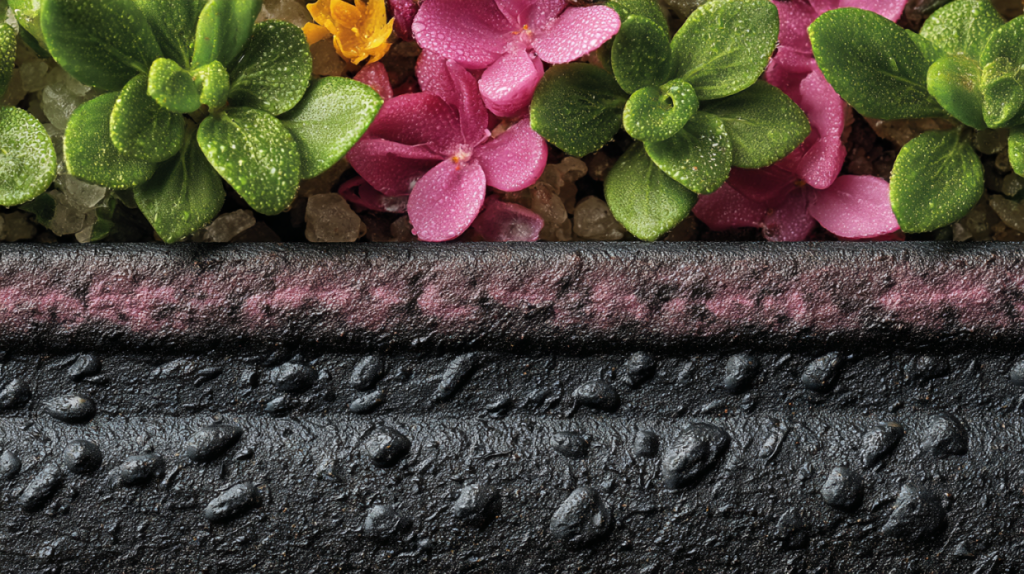
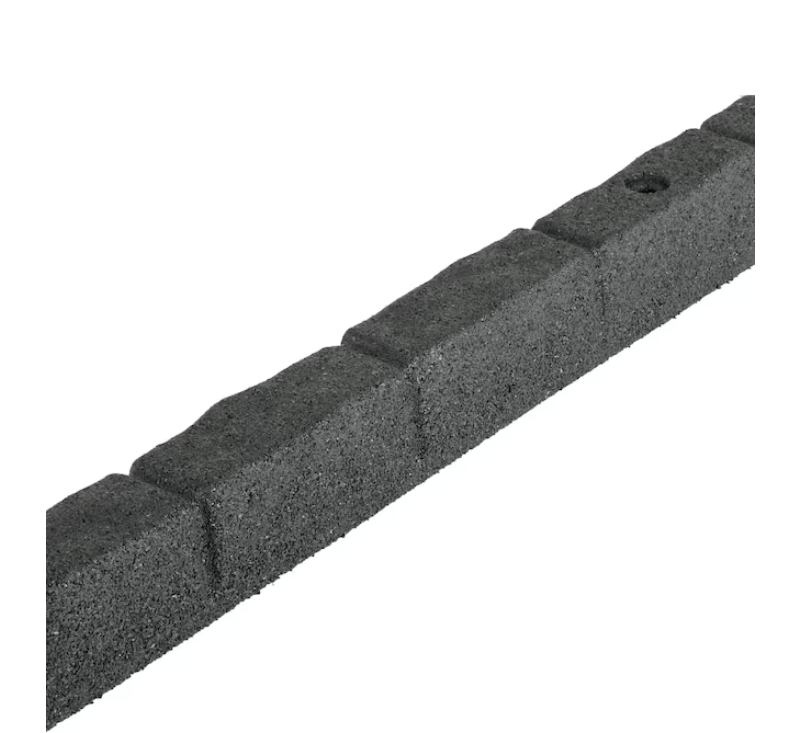
Rubberific 4-ft x 3-in SmartLoc Cobblestone Gray Rubber Landscape edging section with stakes
- Includes 1 piece of 4ft edging, 3 heavy-duty anchor stakes and 1 SmartLoc connector
- Made in the USA from 100% recycled rubber that will not freeze or crack
- Ideal landscape edging for flower beds, gardens, walkways, patios and more
- Classic cobblestone design complements any landscape with a classic and sophisticated look
- Curves to fit your landscape
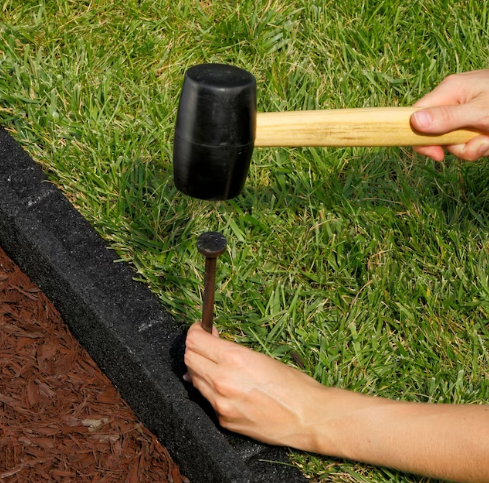
Rubberific 24-ft x 3-in 6 -Pack Black Rubber Landscape edging section with stakes
- Includes 6 pieces of 4ft edging, 18 heavy-duty anchor stakes, and 12 connecting pins, allowing you to properly secure the edging in place and connect additional edgers
- Made in the USA from 100% recycled rubber that will not freeze or crack
- Ideal landscape edging for flower beds, gardens, walkways, patios, and more
- Compliments any landscape with a classic and sophisticated look
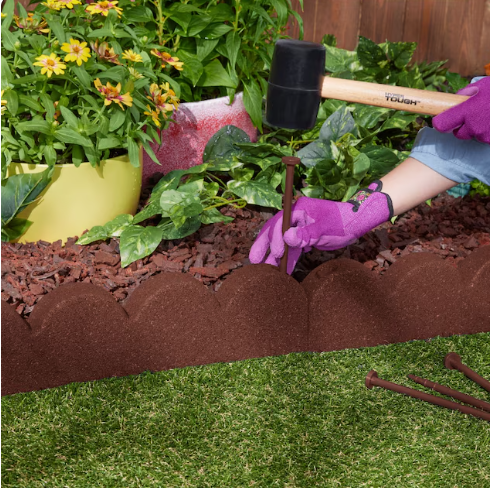
Rubberific 4-ft x 4-in SmartLoc Scallop Red Rubber Landscape edging section with stakes
- Includes 1 piece of 4ft edging, 3 heavy-duty anchor stakes and 1 SmartLoc connector
- Made in the USA from 100% recycled rubber that will not freeze or crack
- Ideal landscape edging for flower beds, gardens, walkways, patios, and more
- Classic scallop design compliments any landscape with a classic and sophisticated look
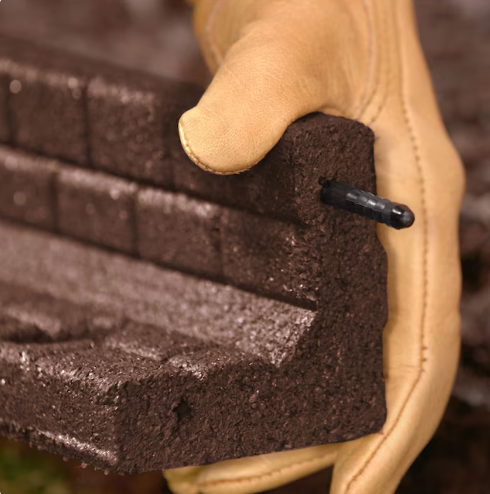
Rubberific 24-ft x 3-in Brickface 6 -Pack Brown Rubber Landscape edging section with stakes
- Includes 6 pieces of 4ft edging, 18 heavy-duty anchor stakes, and 12 connecting pins, allowing you to properly secure the edging in place and connect additional edgers
- Made in the USA from 100% recycled rubber that will not freeze or crack
- Ideal landscape edging for flower beds, gardens, walkways, patios, and more
- Classic brick design compliments any landscape with a classic and sophisticated look
Discover how recycled rubber edging can revolutionize your outdoor spaces with style, durability, and eco-conscious design
The world of landscaping has evolved dramatically over the past decade, with innovative materials replacing traditional options that once dominated garden centers. Among these game-changing products, Rubberific landscape edging has emerged as a standout solution for homeowners and professional landscapers seeking the perfect balance of functionality, aesthetics, and environmental responsibility.
Gone are the days when landscape edging meant choosing between flimsy plastic strips that crack in winter or expensive stone that requires professional installation. Today’s savvy gardeners are discovering that rubber-based edging solutions offer unprecedented versatility, combining the durability of industrial materials with the flexibility needed for creative garden designs.
Understanding Rubberific Landscape Edging: More Than Just a Border Solution
Rubberific landscape edging represents a revolutionary approach to garden border management, crafted from recycled rubber materials that transform discarded tires into beautiful, functional landscape elements. This innovative product serves multiple purposes in modern garden design, acting as a barrier between different landscape zones while maintaining clean, professional-looking borders that enhance overall property aesthetics.
The primary function of Rubberific landscape edging extends far beyond simple visual separation. This versatile material creates defined boundaries between lawn areas and flower beds, prevents mulch migration, controls grass encroachment, and provides structure for garden pathways. Professional landscapers particularly appreciate how this edging system maintains its shape and position through seasonal changes, eliminating the constant readjustment required with traditional materials.
What sets Rubberific landscape edging apart from conventional options is its unique composition and manufacturing process. Each piece contains recycled rubber derived from automotive tires that would otherwise occupy landfill space. This transformation process not only diverts waste from environmental disposal sites but creates a superior landscaping product that outperforms many traditional alternatives in durability and weather resistance.
The Installation Process: Achieving Professional Results with DIY Simplicity
Installing Rubberific landscape edging requires minimal tools and expertise, making it an ideal project for weekend gardeners and professional contractors alike. The installation process begins with proper site preparation, which involves clearing the intended border area of debris, weeds, and existing vegetation that might interfere with edging placement.
The first step involves creating a shallow trench along the desired border line, typically 2-3 inches deep and wide enough to accommodate the edging profile. This trench should follow the natural contours of your landscape design while maintaining consistent depth for uniform appearance. Using a flat-blade shovel or specialized edging tool ensures clean, straight lines that will enhance the professional appearance of your finished installation.
Rubberific landscape edging installation requires careful attention to proper alignment and secure anchoring. The edging pieces connect through an innovative interlocking system that creates seamless joints between sections. Each connection point should be firmly pressed together to eliminate gaps that could allow weed growth or mulch spillage. The material’s inherent flexibility allows for smooth curves and gentle transitions without requiring special corner pieces or complex cutting procedures.
Ground preparation plays a crucial role in installation success. The trench bottom should be level and firm, with loose soil tamped down to prevent settling that could cause edging displacement over time. Adding a thin layer of sand to the trench bottom creates an ideal foundation that promotes proper drainage while providing stable support for the edging material.
Securing Rubberific landscape edging involves driving specially designed stakes through pre-molded holes in the edging material. These stakes should penetrate at least 6 inches into the ground below the trench level, ensuring the edging remains firmly positioned through freeze-thaw cycles and seasonal ground movement. Proper staking intervals typically range from 3-4 feet apart, with additional stakes at curves and connection points.
The Compelling Benefits of Choosing Rubberific Solutions
The advantages of selecting Rubberific landscape edging extend well beyond initial cost considerations, encompassing long-term value propositions that make this material increasingly popular among discerning property owners. The durability factor alone often justifies the investment, as this edging system maintains its structural integrity and appearance for decades rather than requiring periodic replacement like many alternative materials.
Weather resistance represents perhaps the most significant benefit of Rubberific landscape edging over traditional options. Unlike wood that rots, metal that rusts, or plastic that becomes brittle in cold temperatures, rubber-based edging maintains its flexibility and strength through extreme temperature variations. This resilience eliminates the annual spring ritual of replacing damaged edging sections, saving both time and money over the product’s extended lifespan.
The maintenance requirements for Rubberific landscape edging are remarkably minimal compared to other border solutions. The non-porous surface resists staining from mulch, soil, and organic matter, maintaining its appearance with occasional rinsing from a garden hose. Unlike painted materials that require periodic refinishing or natural materials that need regular treatment, rubber edging retains its color and texture without additional care.
Environmental benefits provide another compelling reason to choose Rubberific landscape edging for conscious consumers. Each linear foot of edging diverts significant amounts of rubber waste from landfills while creating a product that can be recycled again at the end of its service life. This circular economy approach aligns with sustainable landscaping practices that prioritize environmental stewardship alongside aesthetic goals.
The versatility of Rubberific landscape edging accommodates virtually any landscape design concept, from formal geometric patterns to flowing organic shapes. The material’s flexibility allows for smooth curves without kinking or buckling, while its structural stability maintains crisp lines in straight applications. This adaptability eliminates the need for multiple edging materials in complex landscape designs.
Durability That Stands the Test of Time
When evaluating landscape edging options, longevity often determines the true value proposition of any material investment. Rubberific landscape edging excels in this crucial category, offering exceptional durability that surpasses traditional materials in virtually every measurable category. The rubber composition provides inherent flexibility that prevents cracking from ground movement, temperature fluctuations, and impact damage that commonly affects rigid edging materials.
The manufacturing process for Rubberific landscape edging involves compression molding techniques that create uniform density throughout each piece. This consistent material distribution eliminates weak points that could lead to premature failure, ensuring reliable performance across the entire installation. Quality control measures during production verify that each piece meets stringent standards for tensile strength, flexibility, and weather resistance.
Field testing and real-world applications have demonstrated that Rubberific landscape edging maintains its structural integrity through decades of use without significant degradation. Properties installed with this edging system over twenty years ago continue to perform effectively, with minimal signs of wear or deterioration. This proven track record provides confidence for homeowners making long-term landscape investments.
The impact resistance of Rubberific landscape edging proves particularly valuable in high-traffic areas where conventional materials might suffer damage from lawn mowers, string trimmers, and foot traffic. The rubber composition absorbs impact energy rather than transferring it to the surrounding installation, preventing the chain-reaction damage that can occur with brittle edging materials.
Sourcing and Purchasing Considerations
Acquiring Rubberific landscape edging involves understanding the distribution network and selecting appropriate suppliers for your specific project requirements. Major home improvement retailers typically stock basic profiles and colors, providing convenient access for standard residential applications. However, specialized landscaping suppliers often offer expanded selections and professional-grade options for more demanding installations.
Online purchasing platforms have expanded access to Rubberific landscape edging products, often providing competitive pricing and direct delivery options for larger projects. These platforms frequently offer detailed product specifications, installation guides, and customer reviews that assist in product selection and project planning. Bulk purchasing options through online suppliers can significantly reduce per-linear-foot costs for extensive installations.
Professional landscapers and contractors often develop relationships with specialized distributors who provide volume pricing, technical support, and project consultation services. These professional channels typically offer the complete range of Rubberific landscape edging profiles, colors, and accessories required for complex commercial and residential installations.
Regional availability may vary depending on local market conditions and distributor networks. Contacting multiple suppliers often reveals price variations and availability differences that can impact project budgets and timelines. Some suppliers offer design consultation services that help optimize product selection for specific applications and aesthetic goals.
Comparative Analysis: How Rubberific Stacks Against Alternatives
Understanding the competitive landscape helps property owners make informed decisions when selecting landscape edging materials. Rubberific landscape edging competes primarily with plastic, metal, stone, and wood alternatives, each offering distinct advantages and limitations that influence suitability for specific applications and budgets.
Traditional plastic edging, while economical initially, often fails to provide the longevity and appearance retention of Rubberific landscape edging. Plastic materials become brittle through UV exposure and temperature cycling, leading to cracking and breakage that requires frequent replacement. The thin profile of most plastic edging also provides limited structural support for containing mulch and preventing grass encroachment.
Metal edging options, including aluminum and steel variants, offer excellent structural integrity but often prove more expensive than Rubberific landscape edging while requiring specialized installation techniques. Metal materials also conduct temperature extremes that can damage nearby plant roots and create safety hazards in high-traffic areas. Corrosion resistance varies significantly among metal edging products, with many requiring protective coatings that need periodic maintenance.
Stone and concrete edging provide unmatched permanence but demand significant installation expertise and often require professional installation for optimal results. The weight and rigid nature of stone materials make curve installation challenging and limit design flexibility compared to Rubberific landscape edging. Cost considerations for stone edging typically exceed rubber alternatives when installation labor and site preparation requirements are included.
Wood edging offers natural aesthetics that complement organic garden designs but requires regular maintenance to prevent rot, insect damage, and weathering degradation. The organic nature of wood materials also means periodic replacement is inevitable, while Rubberific landscape edging maintains its appearance and functionality for decades without replacement needs.
Environmental Impact and Sustainability Features
The ecological implications of landscape material choices have gained increasing importance among environmentally conscious property owners. Rubberific landscape edging addresses these concerns through innovative recycling processes that transform waste materials into valuable landscape products while supporting circular economy principles.
Each linear foot of Rubberific landscape edging contains recycled rubber equivalent to approximately one-third of an automotive tire, representing significant waste diversion from landfill disposal. The manufacturing process requires less energy than producing virgin materials while creating products with superior performance characteristics compared to many traditional alternatives.
The longevity of Rubberific landscape edging contributes additional environmental benefits by reducing replacement frequency and associated transportation impacts. A single installation can provide decades of service without requiring replacement, eliminating the recurring environmental costs associated with manufacturing, transporting, and disposing of shorter-lived alternatives.
End-of-life disposal for Rubberific landscape edging involves recycling processes that can incorporate the material into new products, continuing the circular economy cycle rather than generating waste. This recyclability ensures that the environmental benefits extend throughout the product lifecycle, from initial waste diversion through final disposal.
The manufacturing process for Rubberific landscape edging meets stringent environmental standards and utilizes clean production techniques that minimize emissions and waste generation. Quality control measures ensure consistent recycled content percentages while maintaining product performance standards required for demanding landscape applications.
Material Composition and Manufacturing Excellence
The transformation of discarded tires into Rubberific landscape edging involves sophisticated processing techniques that preserve the beneficial characteristics of rubber while creating products specifically designed for landscape applications. The recycling process begins with tire collection and processing that removes steel reinforcement and textile components, leaving pure rubber material suitable for further refinement.
Grinding and cleaning processes reduce the rubber to specific particle sizes that optimize the characteristics of the final product. Temperature-controlled processing ensures consistent material properties while specialized additives enhance UV resistance, color stability, and structural integrity. The resulting rubber composition provides the flexibility needed for curved installations while maintaining sufficient rigidity for structural applications.
Quality control throughout manufacturing ensures that Rubberific landscape edging meets consistent standards for dimensions, color matching, and performance characteristics. Batch testing verifies that recycled content percentages remain consistent while performance standards exceed industry requirements for landscape edging applications.
The molding process creates precise profiles optimized for installation efficiency and performance effectiveness. Pre-formed drainage channels, connection systems, and mounting holes eliminate field modification requirements while ensuring proper water management and secure installation. Surface textures provide appropriate traction for maintenance activities while resisting accumulation of organic matter that could affect appearance.
Design Flexibility and Aesthetic Applications
Modern landscape design emphasizes flowing lines and organic shapes that complement natural environments while providing functional benefits. Rubberific landscape edging excels in accommodating these design trends through exceptional flexibility that allows smooth curves without kinking, buckling, or creating stress concentrations that could lead to failure.
The material properties of Rubberific landscape edging enable radius curves as tight as 18 inches without requiring heat application or special forming techniques. This flexibility eliminates the need for pre-formed corner pieces or complex connection systems that can create visual discontinuities in flowing design applications. Professional landscapers particularly appreciate this capability when creating naturalistic borders that follow topographical contours.
Straight-line applications benefit from the structural stability of Rubberific landscape edging, which maintains precise alignment without the sagging or wavering that affects less rigid materials. The self-supporting characteristics eliminate the need for continuous concrete footings or frequent staking required with some alternative materials.
Creative applications for Rubberific landscape edging extend beyond traditional border functions to include raised bed construction, pathway definition, and decorative accent applications. The material’s durability and weather resistance make it suitable for exposed applications where appearance retention is critical for overall landscape aesthetics.
Color Options and Visual Integration
Aesthetic integration represents a crucial consideration in landscape edging selection, as border materials significantly influence overall design coherence and visual appeal. Rubberific landscape edging addresses these concerns through carefully developed color options that complement natural landscape elements while providing sufficient contrast for functional effectiveness.
Standard color offerings typically include earth tones such as brown, black, and gray that blend seamlessly with natural soil and mulch colors. These neutral options provide effective borders without competing visually with plantings or hardscape elements. The consistent coloration throughout the material thickness ensures that cut edges maintain color continuity without revealing contrasting core materials.
Specialty colors may include green options that blend with lawn areas and decorative colors for accent applications. The UV-stable pigments resist fading and color shift through extended sun exposure, maintaining appearance consistency throughout the product lifespan. Quality control measures ensure color matching between production batches for installations requiring multiple orders.
The surface texture of Rubberific landscape edging provides visual interest while serving functional purposes. Subtle texture patterns reduce glare and provide slip resistance for maintenance activities while creating visual depth that enhances overall landscape aesthetics. The non-reflective surface properties complement natural materials without creating artificial appearance characteristics.
Cost Analysis and Value Propositions
Understanding the total cost of ownership for landscape edging requires analysis beyond initial material costs to include installation expenses, maintenance requirements, and replacement frequency over time. Rubberific landscape edging typically commands premium pricing compared to basic plastic alternatives but provides superior value when lifecycle costs are considered.
Initial material costs for Rubberific landscape edging generally fall between economy plastic options and premium metal alternatives, positioning it as a mid-range solution with high-end performance characteristics. The price per linear foot varies based on profile complexity, color selection, and purchase quantity, with volume discounts available for larger installations.
Installation costs for Rubberific landscape edging remain competitive with most alternative materials due to the straightforward installation process and minimal tool requirements. The interlocking connection system reduces installation time compared to materials requiring individual fastening or complex joining techniques. Professional installation services typically charge similar rates for rubber edging compared to other flexible materials.
Maintenance cost advantages become apparent over time, as Rubberific landscape edging requires minimal care compared to materials needing periodic refinishing, treatment, or replacement. The absence of painting, staining, or protective coating requirements eliminates recurring maintenance expenses that can accumulate significantly over decades of use.
Dimensional Specifications and Technical Details
Selecting appropriate Rubberific landscape edging profiles requires understanding dimensional options and performance specifications that affect installation success and functional effectiveness. Standard profiles typically range from 3-6 inches in height with varying thickness options designed for different load-bearing and aesthetic requirements.
The thickness specifications of Rubberific landscape edging directly influence structural performance and installation requirements. Thicker profiles provide enhanced load-bearing capacity for applications involving significant soil retention or traffic loads, while thinner options suffice for decorative borders and light-duty applications. Profile selection should consider both functional requirements and aesthetic preferences.
Height options accommodate different landscape applications, from subtle lawn borders requiring minimal profile to raised bed applications demanding greater height for soil retention. Standard heights typically include 4-inch and 6-inch options, with custom heights available through specialized suppliers for unique applications.
Connection system specifications ensure proper joint integrity and installation efficiency. The interlocking design provides secure connections that resist separation while allowing slight movement to accommodate ground settlement and temperature expansion. Connection strength exceeds typical soil pressure and frost heave forces encountered in landscape applications.
Weather Resistance and Climate Performance
Climate considerations play crucial roles in landscape edging selection, as seasonal temperature variations, precipitation patterns, and extreme weather events affect material performance and longevity. Rubberific landscape edging demonstrates exceptional weather resistance across diverse climate zones, from arctic conditions to desert environments.
Temperature cycling resistance prevents the brittleness that affects many landscape materials in cold climates. The rubber composition maintains flexibility at temperatures well below freezing while retaining structural integrity at high temperatures that can degrade alternative materials. This thermal stability eliminates seasonal installation and removal cycles required with less durable options.
UV resistance prevents degradation from solar exposure that causes color fading, surface chalking, and material weakening in many landscape products. The UV stabilization incorporated into Rubberific landscape edging maintains material properties and appearance through decades of sun exposure without requiring protective treatments or replacement.
Moisture resistance prevents the rot, corrosion, and dimensional instability that affects organic and metal edging materials. The non-porous surface sheds water effectively while preventing absorption that could lead to freeze-thaw damage or material degradation. This moisture resistance maintains installation integrity through wet seasons and flood conditions.
Weed Prevention and Ground Management
Effective weed control represents a primary motivation for installing landscape edging, as defined borders help prevent grass encroachment while creating barriers that impede weed establishment in planting areas. Rubberific landscape edging excels in these applications through design features specifically optimized for vegetation management.
The continuous barrier created by properly installed Rubberific landscape edging prevents lateral root spread from adjacent lawn areas while creating physical obstacles to weed germination along border areas. The material height and below-ground installation depth combine to create effective barriers against most common weedy species.
Root barrier functionality extends below the visible edging profile, with buried portions preventing underground spread of aggressive grasses and perennial weeds. The material density and continuous installation eliminate gaps that could allow root penetration while maintaining flexibility for ground movement accommodation.
Surface characteristics of Rubberific landscape edging resist accumulation of organic matter that could provide growing medium for weed establishment along the border interface. The smooth surface sheds debris effectively while preventing the crevices where seeds could germinate and establish root systems.
Maintenance Requirements and Long-term Care
The minimal maintenance requirements of Rubberific landscape edging represent significant advantages over alternative materials that require regular care to maintain appearance and functionality. Understanding these maintenance needs helps property owners make informed decisions and plan for long-term landscape management.
Routine cleaning involves periodic rinsing with water to remove accumulated soil, mulch particles, and organic debris that could affect appearance. The non-porous surface prevents staining and discoloration, making cleaning simple and effective. Mild soap solutions can address stubborn accumulations without affecting material properties or appearance.
Inspection requirements focus on connection integrity and proper positioning rather than material condition assessment required with degradable alternatives. Annual inspections should verify that edging remains properly aligned and that connections maintain integrity. Ground settlement or frost heave effects may require minor repositioning but rarely necessitate material replacement.
Seasonal maintenance typically involves debris removal and minor repositioning rather than the refinishing, replacement, or treatment required with many alternative materials. The absence of organic material susceptibility eliminates insect damage concerns and rot prevention requirements that affect wood edging systems.
Cutting and Customization Techniques
Adapting Rubberific landscape edging to specific design requirements often involves field cutting to achieve precise lengths and custom angles. Understanding proper cutting techniques ensures clean cuts that maintain material integrity while achieving professional appearance standards.
Sharp utility knives or specialized rubber cutting tools provide the cleanest cuts with minimal material distortion. Straight cuts require steady pressure and multiple scoring passes rather than attempting to cut through the material in a single pass. Clean cutting surfaces prevent premature wear at cut edges while maintaining weather resistance.
Angle cuts for corner applications require careful measurement and marking to ensure proper fit and appearance. Templates or angle guides help achieve consistent results when multiple angled cuts are required. The material flexibility accommodates slight measurement variations while maintaining tight joint appearance.
Heat application can facilitate cutting operations in thick profiles, but excessive heat should be avoided to prevent material degradation. Warm ambient temperatures generally provide sufficient material softening for easier cutting operations. Cooling cut edges quickly prevents material distortion that could affect fit quality.
Safety Considerations for Family Environments
Family-friendly landscape materials must meet safety standards that protect children and pets from injury while providing effective landscape functionality. Rubberific landscape edging addresses these concerns through design features and material properties that prioritize safety without compromising performance.
Rounded edges and smooth surfaces eliminate sharp edges that could cause injury during play activities or maintenance operations. The flexible material properties prevent the rigid edges that make stone or metal alternatives potentially hazardous in high-traffic areas. Surface textures provide adequate traction without creating rough surfaces that could cause abrasions.
Non-toxic material composition ensures safety for children and pets who might have contact with the edging material. The recycled rubber composition contains no harmful chemicals or additives that could pose health risks through normal contact or incidental ingestion. Manufacturing processes eliminate contaminants that could affect safety.
Impact absorption characteristics provide additional safety benefits in play areas and high-traffic zones. The rubber composition absorbs impact energy rather than transferring it to users, reducing injury potential compared to rigid alternatives. This characteristic proves particularly valuable around playground areas and active recreation spaces.
Versatile Applications Across Landscape Types
The adaptability of Rubberific landscape edging enables effective use across diverse landscape applications, from formal geometric gardens to naturalistic native plant installations. Understanding these applications helps identify opportunities for incorporating rubber edging into various design concepts.
Residential applications frequently involve separating lawn areas from planting beds, defining pathway borders, and creating decorative accents around landscape features. The material flexibility accommodates the curved borders favored in contemporary residential design while providing the structural support needed for functional applications.
Commercial landscape installations benefit from the durability and low maintenance characteristics of Rubberific landscape edging in high-visibility applications where appearance retention is crucial. The material resists damage from maintenance equipment while maintaining precise borders that enhance overall landscape aesthetics.
Specialized applications include raised bed construction, erosion control installations, and decorative accent features. The load-bearing capacity and weather resistance make rubber edging suitable for demanding applications while the aesthetic options complement various design themes.
Installation Resources and Professional Support
Successful Rubberific landscape edging installation relies on proper technique and adequate preparation, making installation guidance valuable for both DIY enthusiasts and professional contractors. Understanding available resources helps ensure optimal installation results and long-term performance.
Manufacturer installation guides provide detailed instructions specific to rubber edging products, including tool requirements, site preparation procedures, and connection techniques. These resources typically include troubleshooting information for common installation challenges and performance optimization tips.
Professional installation services offer expertise for complex applications or when time constraints prevent DIY installation. Experienced installers understand proper technique for curved applications, challenging terrain, and integration with existing landscape features. Professional installation often includes material warranties and performance guarantees.
Online resources and video tutorials demonstrate proper installation techniques for visual learners who benefit from step-by-step demonstrations. These resources often include tips for handling common installation challenges and achieving professional-quality results with basic tools.
Real-World Performance and User Experiences
Understanding actual performance in diverse applications provides valuable insights for potential users evaluating Rubberific landscape edging options. Real-world experiences often reveal practical considerations that may not be apparent from product specifications alone.
Long-term installations demonstrate the durability claims through visible performance in demanding environments. Properties with decades-old rubber edging installations provide evidence of weather resistance, structural integrity, and appearance retention that supports manufacturer claims and user confidence.
User testimonials frequently highlight the installation simplicity and maintenance advantages that make Rubberific landscape edging popular among homeowners seeking low-maintenance landscape solutions. Professional landscapers often emphasize the material consistency and reliable performance that supports their reputation and client satisfaction.
Performance in extreme conditions, including severe weather events and challenging soil conditions, demonstrates the resilience that makes rubber edging suitable for diverse geographic regions and climate zones. These real-world tests often exceed laboratory conditions and provide confidence for demanding applications.
Rubberific landscape edging represents a sophisticated solution for modern landscape border requirements, combining environmental responsibility with superior performance characteristics that address the practical needs of contemporary property owners. The material’s unique combination of recycled content, weather resistance, and design flexibility positions it as a premium choice for discerning gardeners who prioritize both aesthetic excellence and environmental stewardship.
The comprehensive benefits of choosing Rubberific landscape edging extend well beyond initial cost considerations to encompass long-term value propositions that justify the investment through reduced maintenance requirements, exceptional durability, and consistent performance across diverse applications and climate conditions. For property owners seeking landscape edging solutions that deliver professional results while supporting sustainable practices, rubber-based edging systems offer compelling advantages that continue to gain recognition throughout the landscaping industry.
Whether your project involves simple border definition or complex design implementation, Rubberific landscape edging provides the reliability, versatility, and environmental benefits that modern landscaping demands. The material’s proven track record, combined with comprehensive technical support and installation resources, ensures successful project outcomes that enhance property aesthetics while contributing to broader environmental conservation goals.